A forest that has been cut into pieces is not the same forest, only smaller. It is a different place. The pieces may each hold trees, shade and soil, but the animals inside them are stuck. They cannot cross the open ground between one patch and the next without exposing themselves, and over time the fragments drift apart biologically as well as physically.
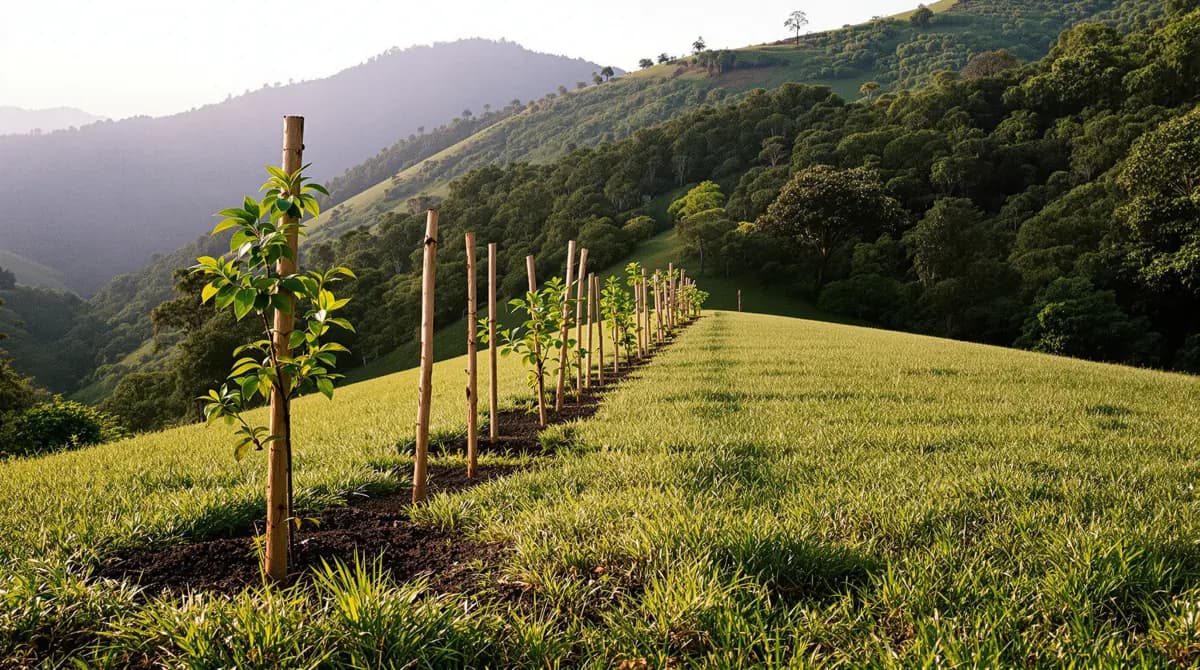
That is the problem a wildlife corridor is meant to solve. In the third quarter of 2025, Foundation Phoenix planted one on the estate in Rivera, Huila, linking two forest fragments that had been separated for years.
What a corridor actually is
A corridor is a strip of restored habitat that reconnects two areas of forest. It is not a hedge and not a decorative row of trees. It is a working piece of forest — narrow, but continuous — that an animal can move through without ever having to step into open, unprotected ground.
The reasoning behind it is simple, and it is the same everywhere fragmentation happens. A population confined to a small patch has fewer options. It cannot move to find food when a season turns poor. It cannot recolonise a patch where something has gone wrong. And it cannot exchange individuals — which means, over generations, it cannot exchange genes.
Reconnect the patches and much of that pressure eases. Two small populations that can reach each other behave, ecologically, more like one larger one. Seeds travel further, because the animals carrying them travel further. Plants that depend on pollinators or seed-dispersers get access to ground they had been cut off from.
None of this is a claim about what has already happened on the estate. A corridor planted in 2025 is a young corridor. What we can report is that the link exists, that it is planted, and that it is being maintained.
The Q3 planting
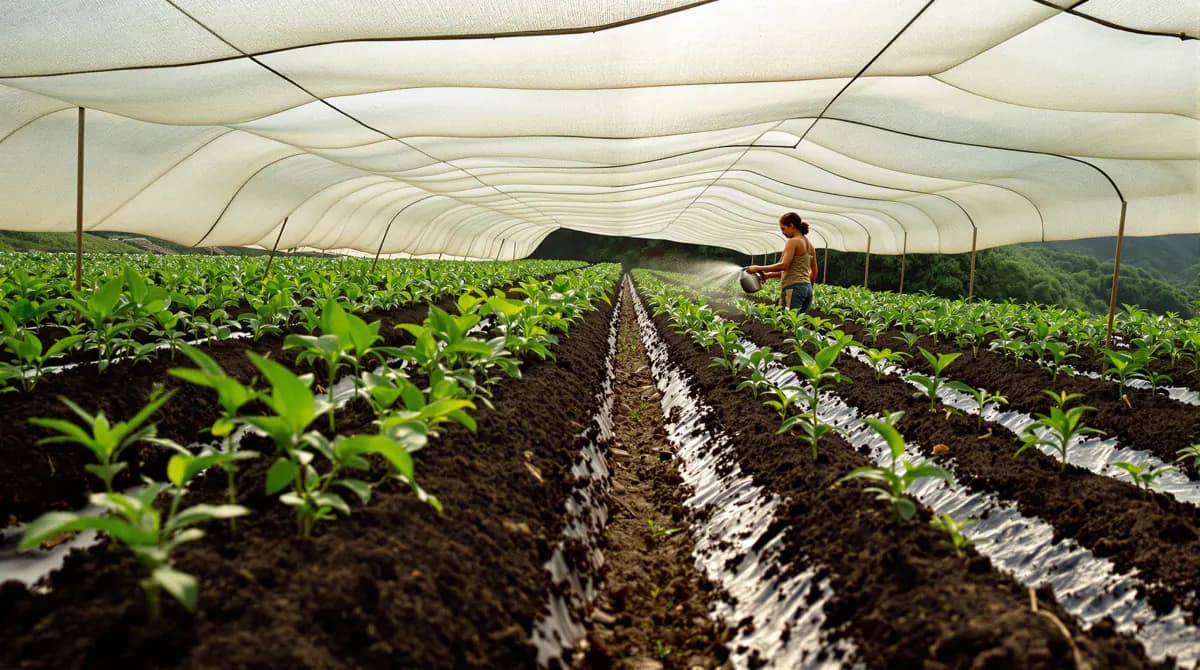
The work rests on a chain that began earlier in the year. The nursery's first seedling beds went in during the second quarter of 2025. Those beds are what made the corridor planting possible in the third — the seedlings that went into the ground between the two fragments were raised on site, from native species, close to where they would live.
That matters more than it sounds. Seedlings raised locally are already adapted to the altitude, the rainfall pattern and the soil of this Andean valley. They arrive at the planting site with hours of travel behind them, not days. And raising them here means the foundation is not dependent on outside suppliers to decide what gets planted.
The planting itself followed the ground. A corridor has to be laid out where animals will actually use it, and where the terrain and the existing land use allow a continuous strip. The two fragments now have a planted link between them.
Restoration on this estate is documented as it goes. The before-and-after photographs of the hillside restoration are part of the same record — the foundation's habit of photographing a site before work begins, so that the change is a matter of evidence rather than assertion.
What comes after planting
Putting seedlings in the ground is the visible part and the smaller part. A corridor is only a corridor once the trees survive, and survival in the first years depends on maintenance: clearing competing growth, replacing losses, watching how the strip behaves through a full cycle of wet and dry.
This is the work that continues past the planting date, and it is the part that is easy to underfund. It is also why the foundation tracks seedlings rather than simply counting them at the moment they go in.
What it costs
To give a sense of scale, based on 2025 field costs and offered as illustrative rather than as a price list:
- 250 € ≈ 1,000 m² of wildlife corridor restored
- 20 € ≈ a dozen native seedlings planted and tracked
A thousand square metres is a real, walkable piece of ground. It is the kind of unit that makes a corridor legible: not an abstract restoration target, but a length of the strip that now exists because someone funded it, someone raised the seedlings, and someone planted and maintained them.
Why here
Rivera is a small town in an Andean valley in Huila, in a landscape that also holds the Tatacoa Desert, thermal springs and coffee country. It is worked land, and it has been for a long time. Fragmentation here is not a catastrophe that happened in one year; it is the accumulated result of ordinary use.
Which is also why reconnection is realistic. The fragments are still there. The species are still in them. What was missing was the connection between them — and that is something a foundation with a nursery, a planting season and a maintenance plan can actually put back.
The corridor planted in the third quarter of 2025 is one link. It is early, and we will report on it as it grows.

 Regeneration