
Colombia & Surroundings
Why Huila: The Place We Chose to Work
Phoenix Initiative3 min read
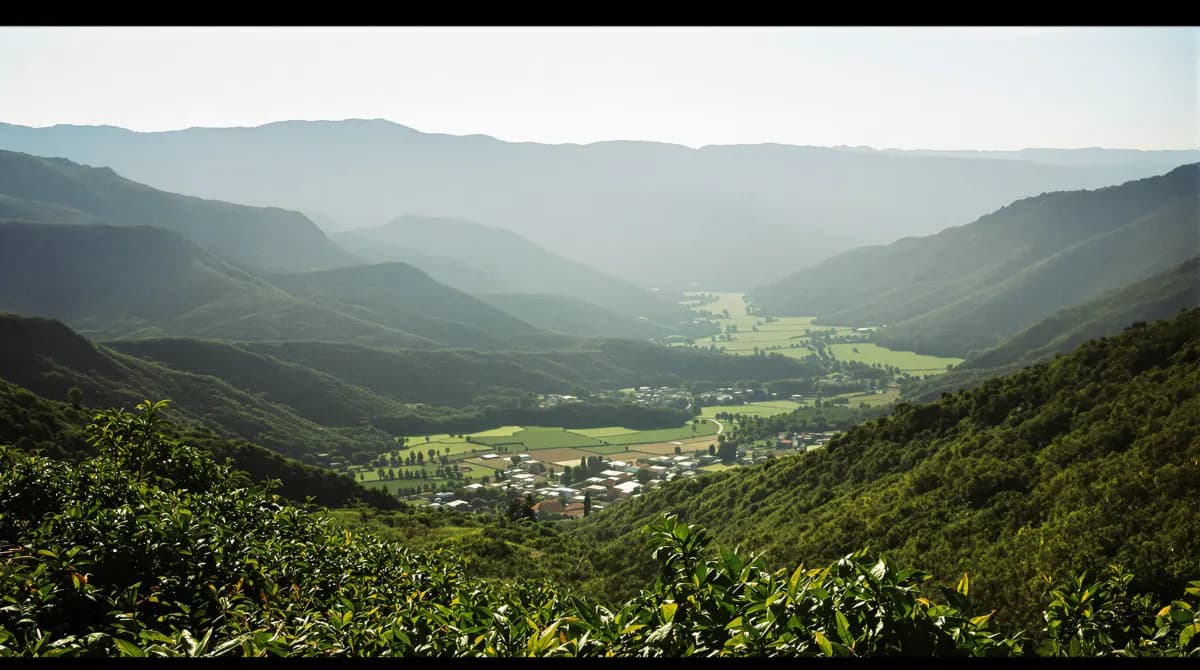
An organization's address is an argument. Before any program, before any budget line, choosing where to work is the first statement of what you believe matters. Ours is Rivera, a small town in the department of Huila, in an Andean valley in southern Colombia.
This article is not a travel piece. It is an attempt to explain, plainly, why a restoration foundation makes sense in this particular place, and why our five pillars look the way they do.
The valley
Huila sits in the Andes, and the valley around Rivera carries the region's contrasts within a short distance. Not far away lies the Tatacoa Desert, a dry landscape that works on the mind like a warning: this is one of the things land can become. In other directions there are thermal springs, and the slopes of coffee country. Heat and water, scarcity and fertility, sit close together here.
For a foundation whose first pillar is ecological restoration, that proximity is not scenery. It is the whole argument in miniature. The difference between a degraded hillside and a living one is not abstract in Huila; you can see both within the same horizon.
Rivera itself is a small town. That matters more than it might seem. In a small town, work is visible. A nursery is not a line in a report; it is a place people walk past. A training cohort is not a statistic; it is neighbors. Accountability at that scale is not a policy, it is a daily condition.
What the land asked first
The foundation's earliest restoration work has been on its own ground: a hillside on the Huila estate that we have been bringing back, and which we have documented in before and after images. This quarter, the first seedling beds of the nursery are going in. Later this year, the plan is to plant a wildlife corridor linking two fragments of forest.
That sequence, hillside, nursery, corridor, was not designed in an office and imported. It is what the land in front of us asked for, in order.
Five pillars as answers
We describe our work in five pillars, and each one is a response to something concrete about this place:
- Ecological restoration, because the valley holds both degraded slopes and living forest fragments, and the distance between them can be closed with native plants, labor, and patience.
- Eco-responsible infrastructure, because the region itself offers the materials and constraints: building with guadua, the local bamboo, and designing autonomous water systems suited to a landscape where water cannot be taken for granted.
- Art, culture and education, because learning here should not have to wait for buildings: workshops in the villages, and classrooms without walls that treat the valley as the teaching space it already is.
- Well-being and healthy living, because restoration is done by people, and programs like women's sport and healthy tables are how a town sustains the energy the land requires.
- Media and outreach, because a place like this is usually talked about from far away; field stories, this journal, and community radio let the valley speak in its own voice.
The sixth line in our budget, operations and compliance, is not a pillar but it serves the same logic: doing things properly, where we are.
Not a backdrop
It would have been easy to choose this valley for its beauty and use it as a backdrop. We are trying to do the opposite: to treat the place as the client. The desert nearby says what neglect can do. The forest fragments say what is still possible. The small town says who the work is with, and for.
That is why Huila. Not because it photographs well, though it does, but because here the questions a restoration foundation exists to answer are asked out loud, every day, by the land itself.